

My Teaching Philosophy
The part of teaching I love most is getting to know my students and finding a way to make a lesson click for them. Sixth graders are growing into more independent learners, but they still need patience, encouragement, and a teacher who notices when they are confused. I want my classroom to be a place where students feel comfortable asking questions, sharing ideas, and making mistakes. I want them to know that struggling with something does not mean they cannot learn it.
I begin planning with California’s Common Core State Standards and ask myself, “What do I want my students to understand and be able to do?” From there, I build lessons that let them see a skill, practice it with me, talk it through with a partner, and try it on their own. In ELA, that might mean breaking a word into meaningful parts, finding a quote that supports an inference, or revising a sentence so a reader can picture it. I want students to understand why they are doing the work, not simply finish an assignment. California’s standards connect reading, writing, speaking, listening, and language, so I look for ways to practice those skills together (California Department of Education [CDE], 2013).

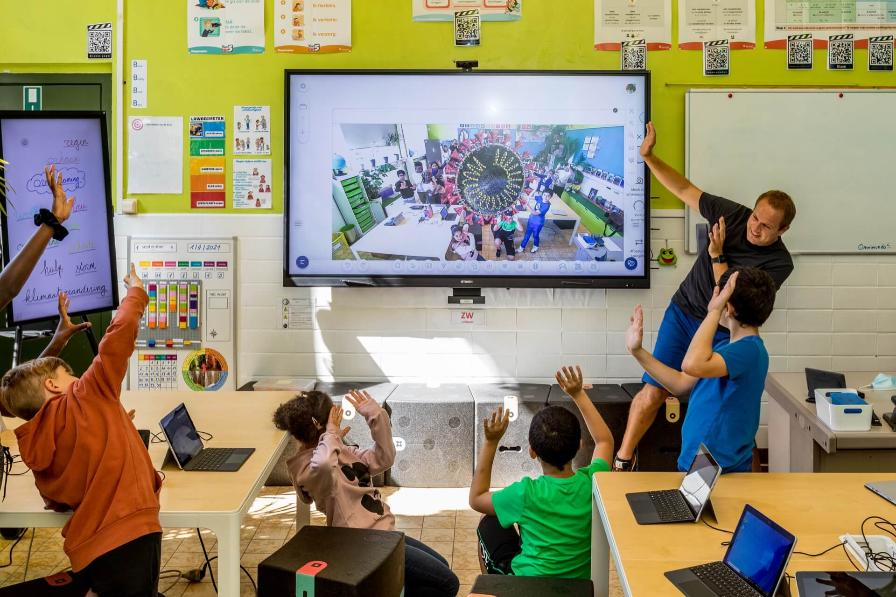
Teaching has also taught me to pay attention to the way students experience a lesson. If several students are unsure which page to use or what to write next, I need to slow down and make the steps clearer. I use modeling, partner conversations, vocabulary support, sentence frames, and examples students can return to. I also want to give students opportunities to connect reading and writing to their interests and experiences. These choices reflect the California ELA/ELD Framework’s attention to language development and CAST’s guidance on making meaningful learning accessible to different learners (CDE, 2015; CAST, 2024).
My goal is for students to become more confident explaining their thinking. I want them to use evidence when they discuss a text, choose words with purpose when they write, and see revision as a normal part of learning. I will listen to their conversations, look at their work, and use quick checks to see what they understand. My feedback should tell a student something specific: what is working and what they can try next. Feedback connected to a clear learning goal gives students a better path forward (Fisher & Frey, 2009).

Most of all, I want students to feel that I am on their side. I will hold them to high expectations while giving them the support and time they need to reach them. I will work with families, colleagues, and support staff, and I will keep reflecting on my own teaching. When something does not work, I want to be willing to change it. I hope my students leave my classroom knowing that their voices matter and that they are capable of growing as readers, writers, and people.
References
California Department of Education. (2013). California Common Core State Standards: English language arts and literacy in history/social studies, science, and technical subjects. https://www.cde.ca.gov/be/st/ss/documents/finalelaccssstandards.pdf
California Department of Education. (2015). English language arts/English language development framework for California public schools: Kindergarten through grade twelve. https://www.cde.ca.gov/ci/rl/cf/documents/elaeldfwintro.pdf
CAST. (2024). Universal Design for Learning Guidelines version 3.0. https://udlguidelines.cast.org/
Fisher, D., & Frey, N. (2009). Feed up, back, forward. Educational Leadership, 67(3), 20–25. https://www.ascd.org/el/articles/feed-up-back-forward
Create Your Own Website With Webador